

August 2026: Agents That Remember, Mosaic Schema in Studio, and Personalized BI
Quick Answer
Strategy's August 2026 release adds three focused improvements: user-controlled long-term memory for Agents, Mosaic Schema development directly in Mosaic Studio, and personalized dashboard delivery through email bursting in Library.
AI: Agents that remember how people work
Long-Term Memory for Agents
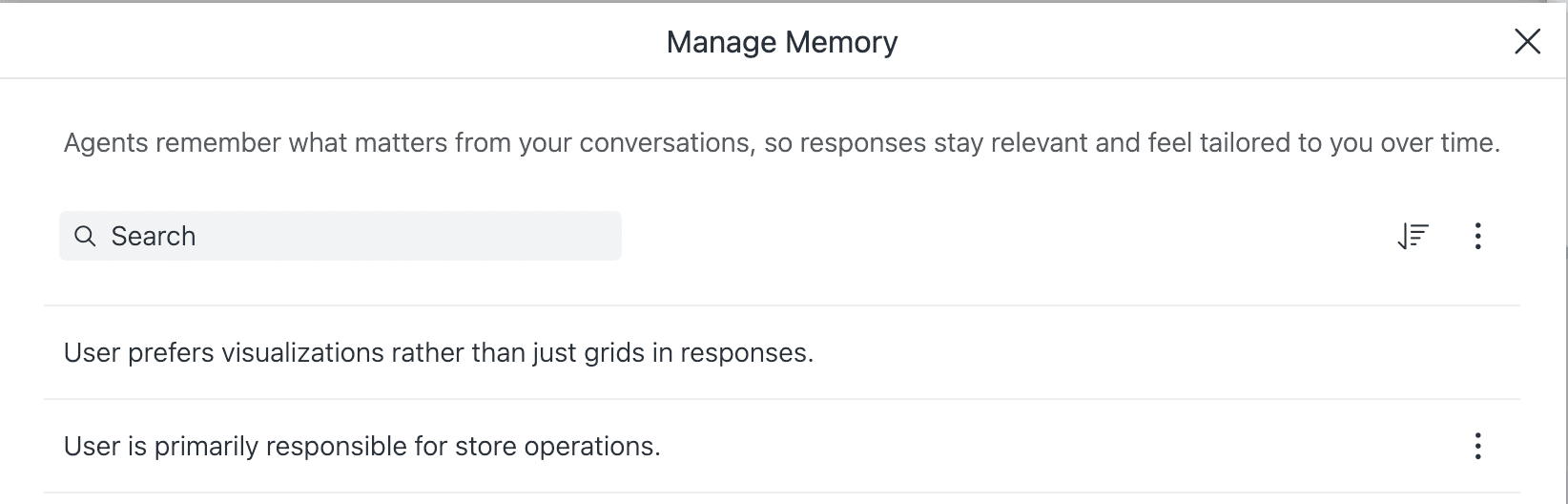
Enterprise AI gets frustrating when every conversation starts from zero. Agents can now build long-term memory from user interactions, remembering details such as preferred language, important concepts, and how a user likes answers framed.
Just as important, users stay in control. They can review what is remembered and remove details that are outdated, irrelevant, or wrong.
That turns memory from a convenience into something much more useful: an Agent that gets better at working with a person over time without hiding the context it relies on.
Mosaic: Build on the schema customers already trust
Develop and Save Mosaic Schema in Mosaic Studio
Enterprise semantic work rarely starts from a blank page. Customers already have metrics, hierarchies, dimensions, and security rules that the business has spent years refining.
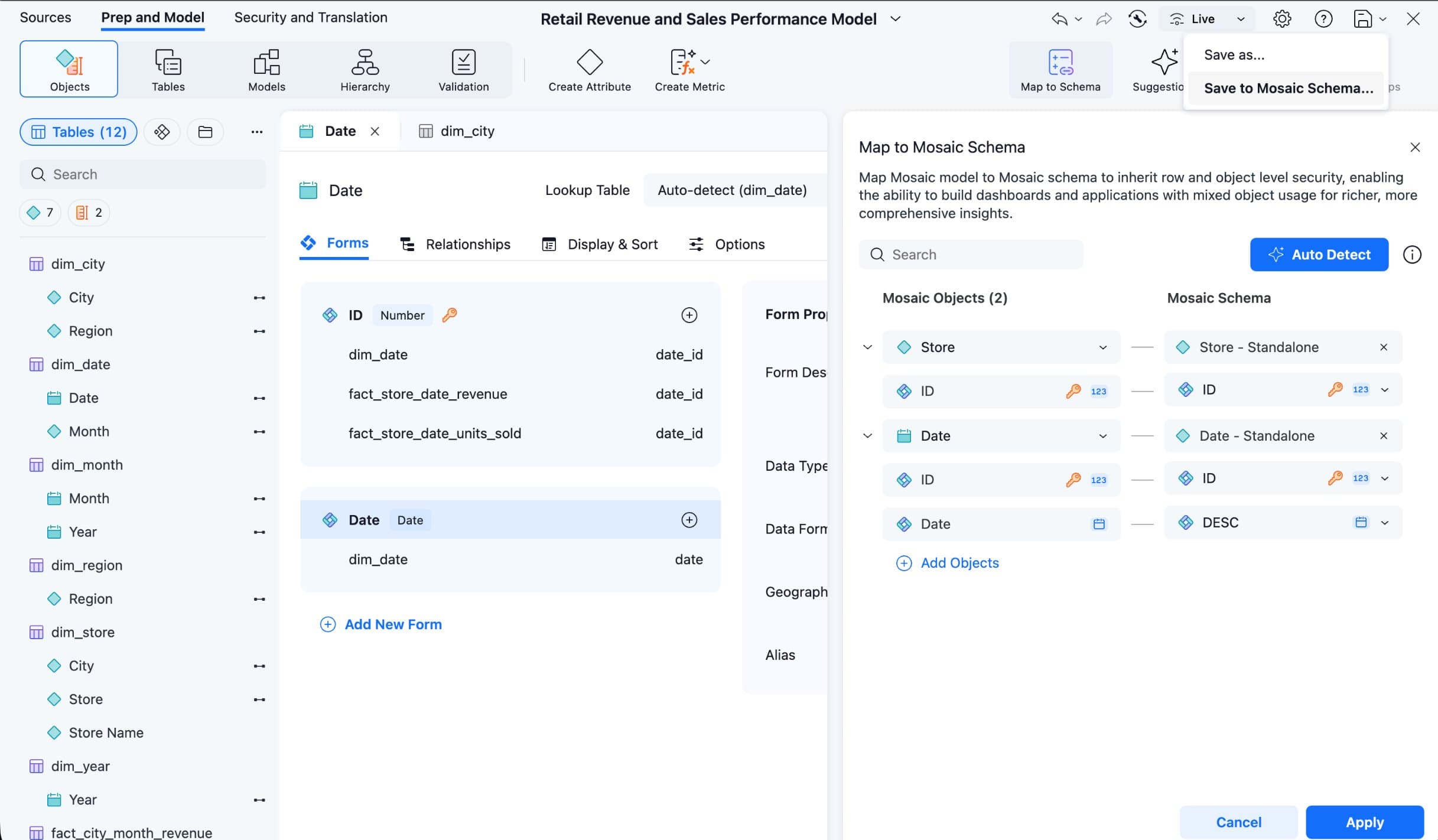
Mosaic Studio can now create, develop, and save Mosaic Schema directly in Studio. Teams can create new schema objects while reusing existing attributes, metrics, hierarchies, shared dimensions, and security policies defined in their projects.
Customers can now keep extending the semantic layer they already trust directly in Mosaic Studio. Teams get a faster, AI-assisted modeling experience while continuing to build on existing definitions, security, and governance. That means less rebuilding and a quicker path to new analytics and AI use cases.
BI: Personalized dashboard delivery without the manual work
Email Bursting for Dashboard Subscriptions in Library
The same dashboard often needs to reach many people, and often it needs to reach each of them more than once, broken out the way they work.
Library now supports email bursting for dashboard subscriptions. From one subscription workflow, creators pick a Send By attribute that resolves recipient addresses from the data itself, and Slice By attributes that determine how the dashboard is filtered for each delivery. One subscription produces the full set of personalized deliveries.
Slice by the attribute that carries the addresses and each regional manager receives only their own region. Add product category as a second Slice By and each manager receives one delivery per category. Onboard a new manager in the warehouse and the next run includes them, with no subscription to edit and no one manually slicing and exporting the same dashboard over and over.
Existing dashboard burst subscriptions created in Workstation remain editable in Library, bringing more of the workflow into the browser without forcing customers to recreate what already works.

What August makes easier
August is a focused release. Agents remember useful context. Mosaic Studio builds on trusted schema. Library personalizes dashboard delivery at scale.
None of these features asks customers to change how the business works around the platform. They make Strategy fit that work better.
Learn more about these August updates on our What's New page and product documentation.
Frequently Asked Questions
What is included in the Strategy Software August 2026 release?
The release includes Long-Term Memory for Agents, the ability to develop and save Mosaic Schema in Mosaic Studio, and email bursting for dashboard subscriptions in Library.
How do users control Agent memory?
Users can review stored details and remove anything that is outdated, irrelevant, or incorrect. The goal is useful personalization with visible, correctable context.
Does Mosaic Studio replace existing Strategy schema investments?
No. It lets teams build on existing schema attributes, metrics, hierarchies, security filters, and shared dimensions instead of rebuilding trusted work from scratch.
What does email bursting in Library change?
It lets one dashboard subscription deliver personalized views to different recipients, reducing manual exports and making targeted distribution easier to manage in the web experience.

Henry Guo
Henry Guo is Director of Outbound Product Management at Strategy, driving go-to-market and turning customer insights into discovery and validation for its semantic layer and AI products. With 15+ years in AI, data and security, he helps ship trusted secure enterprise platforms with measurable value.
Related posts
Strategy's July 2026 release cuts analytics handoffs with portable semantics, AWS Bedrock AI, and governed BI deployments.
Henry Guo
July 17, 2026
Strategy's June 2026 release delivers cloud cost visibility, flexible Mosaic modeling, and governed AI access via MCP. See what analytics costs to run.
Henry Guo
June 18, 2026
Strategy’s May 2026 release introduces Databricks Unity Catalog metadata integration for Strategy Mosaic, GDPR-aligned telemetry anonymization, SQL transaction forms in Library Web dashboards, and customizable global legends to strengthen governed analytics and AI workflows.
Henry Guo
May 15, 2026
Strategy Software's April 2026 updates introduce Save As for Mosaic models, filter carry-through for linked dashboards, Google Sheets export from Strategy Library, and full HyperIntelligence Card authoring in the browser.
Henry Guo
April 17, 2026