
Strategy Apps
Strategy Sales. Your pipeline. Your process. Your software.
A sales system built for the way your business actually sells, running on the Strategy Intelligence Platform at 50% of what you pay today.
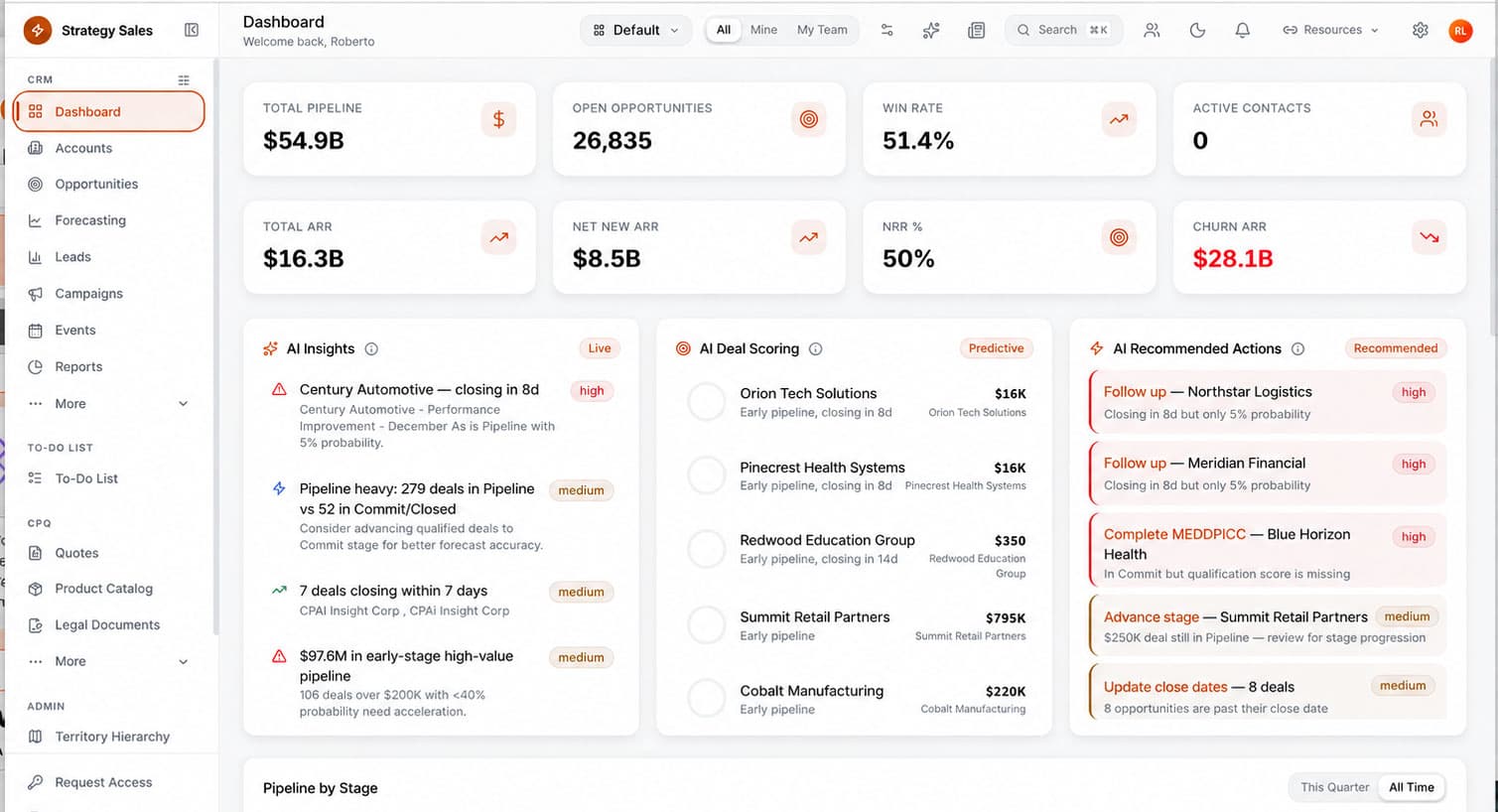
Unified sales process from lead, opportunity, forecast through account and churn
AI native experience
Integrated analytics, no ETL or warehouse required
What it is
The system of record for selling, built around your own model of the business
Accounts, contacts, opportunities, quotes and forecasts, with your stages, your rules and your terminology. It reads the systems you have not replaced where they sit, so it works against the data you have now.

Pipeline
Your stages and your rules
Deal stages, qualification criteria, approval thresholds and territory rules are configuration of your own software, not a product's object model you have to bend the business around.

Accounts
One record per customer
The account a seller opens is the same record service, marketing and finance work from. No duplicate customer masters, no nightly reconciliation to decide which copy is right.

Agents
AI native sales experience
Agents research accounts, draft follow-ups, update records and prepare reviews inside the system, under the same permissions as a person and with everything they did on the record.

Forecasting
Forecasts from live data
Roll-ups, coverage and pipeline health resolve through the same definitions the application writes against, so the number in the review matches the number in the record.
In the flow of the work
What a seller actually gets
Most of the time lost in a sales system goes to finding context that lives somewhere else and to keeping records up to date by hand.

Context
The whole customer on one screen
Open orders, support history, entitlements, usage and marketing activity sit next to the deal, because they are on the same platform.

Admin
Less manual updating
Notes, next steps and record updates are drafted from the meeting and the thread, and the seller confirms rather than retypes.

Questions
Ask in plain language
"Which deals slipped this quarter and why" resolves against governed definitions, so a question gives the same answer as the report.

Actions
Governed actions with rollback
Quotes, approvals and updates run through the platform's action layer, so every change is permissioned, logged and reversible.
Strategy Sales vs Salesforce
Salesforce is a tangled web of software, integrations, maintenance and rising prices
Salesforce is rarely just Salesforce. It is Salesforce plus the products bolted around it and the integrations holding them together. You can replace all of those with the Strategy Intelligence Platform.

Integrations
Integrated by design
The integrations you built around Salesforce exist to move data between systems. On one platform there is nothing to move, so you stop building and maintaining them.

Add-ons
The whole journey
Forecasting, customer health and similar add-ons run on data the platform already holds, so they are features here rather than products you buy separately.

Marketing
Marketing in the same system
Campaigns, journeys and lead handling can be built into the same system, so marketing, sales and operations work from one set of records instead of three copies and a nightly sync.

Experience
AI native experience
Screens built for the work people actually do, with AI in the flow of it. When you want something changed, it is a change to your own software, and you decide when it happens.

Cost
50% of the license
Priced against what the sales stack costs you today, including the add-ons and the people who keep the integrations alive.

Ownership
The software is yours
You own the application and the model of the business inside it, so the roadmap and the renewal are no longer someone else's decision.

Data
No copy to keep in step
Applications read data where it already lives, so there is no warehouse load and no sync window between the record and the report.

Change
Changes in days, not releases
A new stage, field or rule is a change to your own software rather than a request into a vendor's backlog.