
Strategy Apps
Strategy Marketing. Unified research, outreach and campaigns.
It works the top of the funnel end to end: research the accounts you are targeting, write and send the outreach, handle the replies, book the meeting and hand off to a seller. Your marketing team runs campaigns on the same system, down to the landing page.
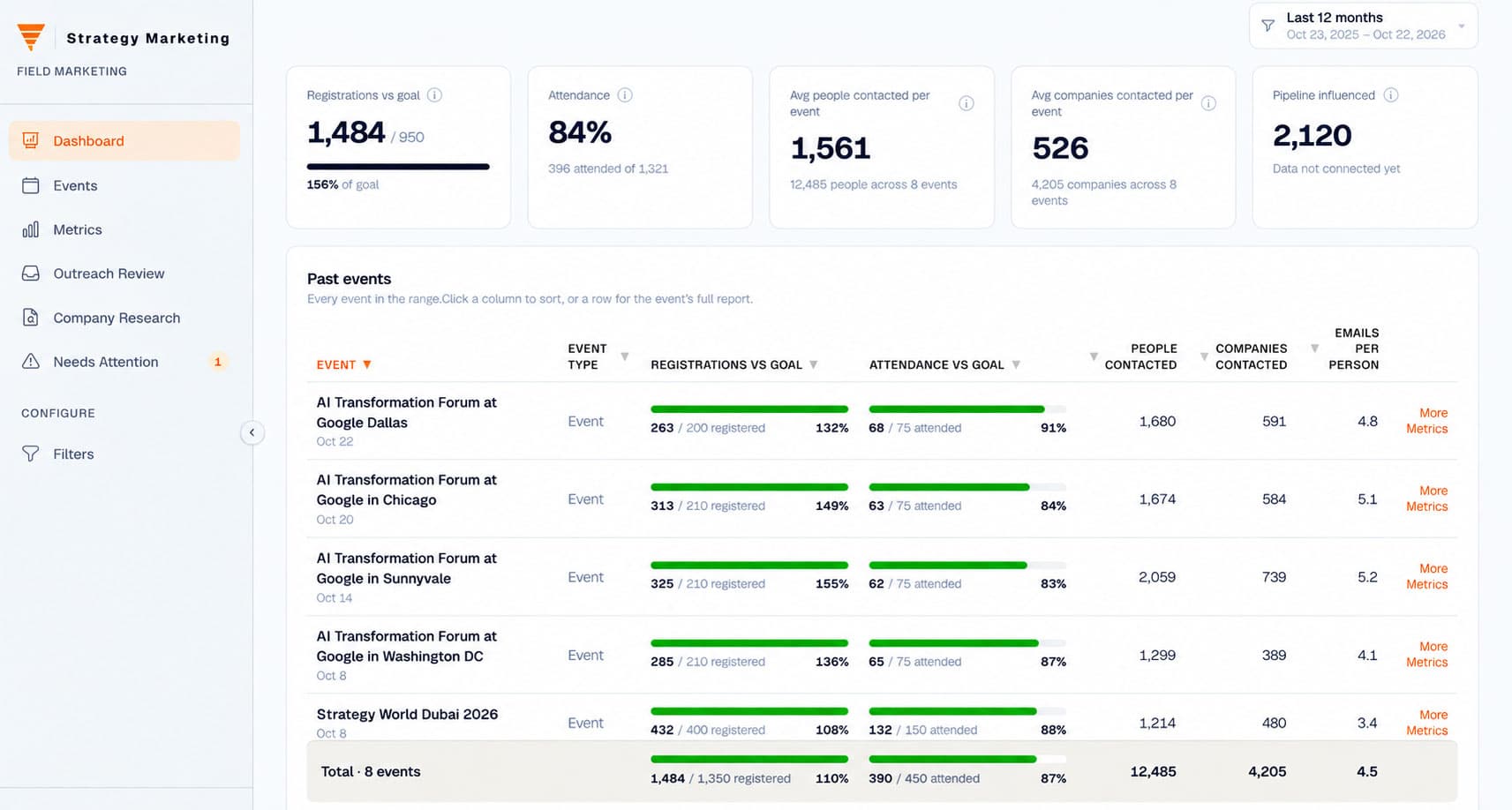
AI automated research, targeting, personalization, email marketing and meeting scheduling
Remove all the handoffs, people and tools for lead generation
One smart person can pilot the entire system
For the marketing team
Build the campaign, the page and the form without filing three tickets
You don't need multiple people and systems to create and execute a campaign. One person can create a campaign, and the system will create the segmentation, personalized messages, content, and execute the campaign.

Segments
Segmentation that is a definition, not an export
Describe the audience and it resolves against live records and governed definitions.

Pages and forms
Landing pages and forms
A campaign creates its own page and form, built in the same system, writing straight to the record. No CMS ticket, no form tool, no connector between the two.

Content
Website and campaign content
Page copy, emails, variants and briefs are drafted against your product facts, brand rules and approved claims.

Journeys
Journeys that take governed actions
A buyer's journey uses the platform's action layer, so a campaign can create a task, update an account or open a case, all permissioned and logged.
Efficiency through simplification
What a marketing team stops doing
Most of the effort in a modern marketing stack goes to research, data pulls, content creation, tickets, and integration.

Lists
No more list pulls
Audiences are built where the data lives, so a segment does not start with a request to an operations team and end with a CSV.

Research
No manual account research
The trigger, the context and the draft arrive together, instead of a rep reading news and filings before writing anything.
Web
No queue for a landing page
The page and the form are part of the campaign, so the launch date does not depend on someone else's sprint.

Handoff
Leads land as records, not files
A lead, the account it belongs to and the conversation behind it are one record, so routing and follow-up do not wait on a sync.
Governance
Marketing runs under the same rules as everything else on the platform

Consent
Permissions travel with the data
Consent, region and channel rules are enforced by the platform, in the same place as every other access decision, and every send is on the record.

Claims
Generation inside the guardrails
Agents write against your approved product facts and claims, so personalization does not become a compliance problem.

Identity
Agents act as someone
An agent sending on behalf of a seller has that seller's permissions and no more, with everything it did written to the record.

Reporting
One number for the funnel
Campaign results and pipeline read the same records and definitions, so marketing and sales report against the same funnel.
What it replaces
Marketing automation is one line item in a much longer bill
Campaign management, the customer data platform, research tools, the connectors between them and the web work around them are separate purchases today. You can replace them with the Strategy Intelligence Platform.

Automation
Marketo and the suite around it
Campaigns, journeys, forms and nurture run as your own application rather than as products with their own model, their own copy of the customer and their own bill.

Data
No separate customer data platform
The profile you would assemble in a CDP is the record the business already runs on, so there is nothing to unify and nothing to keep in step.
Research
Account research tools
Trigger research runs against public sources inside the workflow that writes the outreach, rather than as a subscription someone checks separately.

Integration
The connectors between them
Marketing, sales and service are applications on one platform, so the middleware moving leads and accounts between products has nothing left to move.
Web
Landing page and form tooling
Pages, forms and campaign content are generated in the same system that holds the records they write to.

Outbound
Much of the BDR motion
Research, first touch, follow-up, reply handling and booking run as workflows, so people spend their time on the conversations that are worth having.

Cost
50% of the license
Priced against what the marketing stack costs today, including the connectors and the people who maintain them.

Ownership
The software is yours
You own the application and the customer model inside it, so changes follow your calendar rather than a vendor's release train.