

Strategy Is Certified in the Claude Partner Network
Quick Answer
Claude Partner Network Certification: Strategy is Certified in the Claude Partner Network, recognizing the expertise of its Claude-certified practitioners.
Claude Integration Through MCP: Through Model Context Protocol (MCP), Claude connects to Strategy's Universal Semantic Layer for governed enterprise data access, trusted business metrics, and consistent security controls.
Trusted Enterprise AI and Data Fabric: Strategy's Universal Semantic Layer unifies business definitions, metrics, and governance across data platforms, BI tools, and AI applications, helping Claude deliver more reliable insights without duplicating business logic.
An AI assistant can connect to an enterprise database in seconds. That does not mean it understands the business.
Consider a request to explain why regional revenue changed last quarter. The model may retrieve the right records but still confuse recognized revenue with bookings, apply the wrong territory definition, or overlook a reporting-period adjustment.
Powerful reasoning is valuable. For trustworthy enterprise analysis, it must be paired with business definitions that people already use, approved metrics, and governed access to the underlying data.
Why this certification matters
Strategy is Certified in the Claude Partner Network, recognizing our investment in Claude-trained practitioners. Our team will build on that expertise to help customers put Claude into production. For customers adopting Claude, that expertise complements Strategy's existing technology for connecting AI to governed enterprise data through MCP. It brings together the skills needed to implement Claude and an established foundation for consistent business metrics, definitions, and access controls.
The context gap behind enterprise AI
Most enterprises are not short of information. Their information is distributed across warehouses, operational systems, analytics tools, and teams that have built different versions of the same metrics.
In a 2026 Strategy/CIO Dive survey of 100 senior enterprise data and technology leaders, 99% reported some difficulty defining consistent metrics across tools. Separately, 87% rated visibility into how AI uses enterprise data as very or extremely valuable. These are reported priorities and challenges, not measured outcomes of an AI deployment.
| 99% reported difficulty withconsistent metrics | 87% value visibility intoAI use of enterprise data |
Define business meaning once. Reuse it everywhere.
A universal semantic layer sits between enterprise data and the tools consuming it. It centralizes metrics, dimensions, relationships, calculations, and access policies so each dashboard or AI assistant does not have to reconstruct them from raw schemas.
For example, net revenue may account for returns, discounts, revenue-recognition rules, and reporting periods. Once that definition is approved, the same calculation can be reused in finance reporting, sales analytics, and AI-assisted questions—within the data each user is entitled to see.
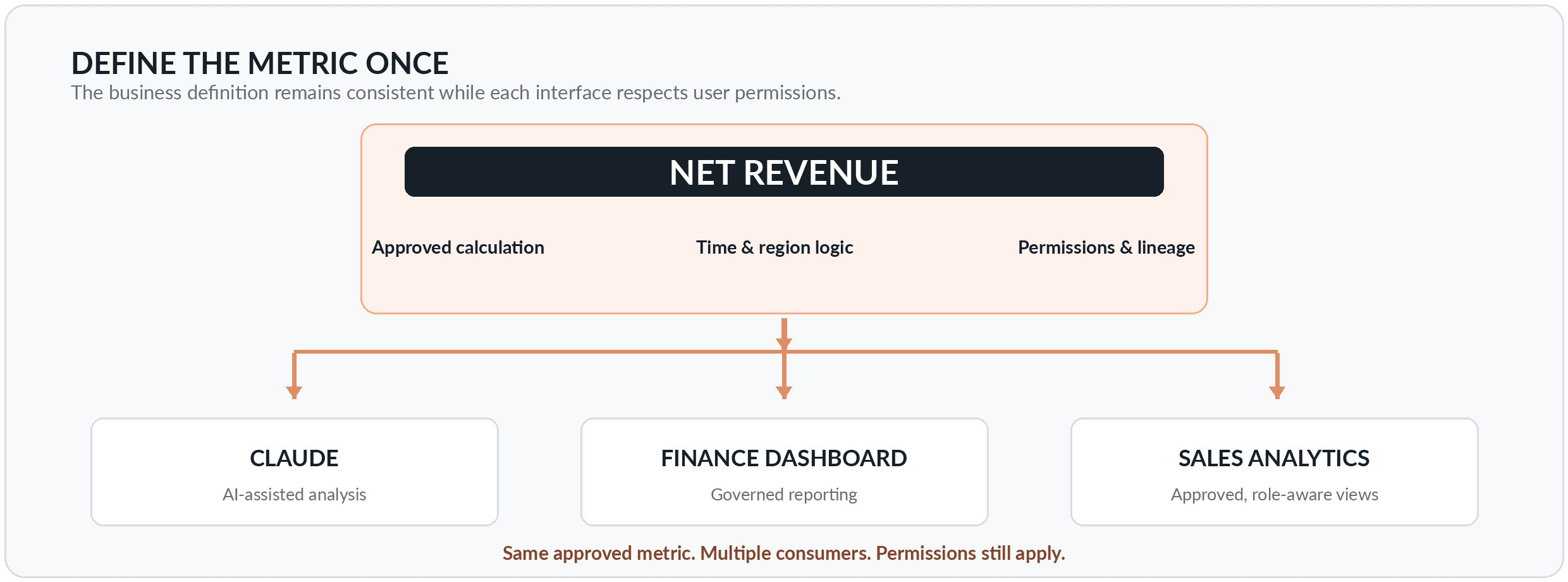
Figure 1. One governed revenue definition can support multiple analytics and AI experiences. Conceptual illustration.
Claude and MCP bring that context into AI
Anthropic introduced Model Context Protocol (MCP) as an open standard that helps AI applications discover and interact with external tools and resources. MCP standardizes the connection; it does not, by itself, supply an organization’s approved metrics or business rules.
Strategy’s existing MCP server enables authorized AI clients, including Claude, to discover and query published, governed semantic models. A client can retrieve their defined metrics and attributes, construct a read-only analytical query, and receive results executed through Strategy’s governed query layer.
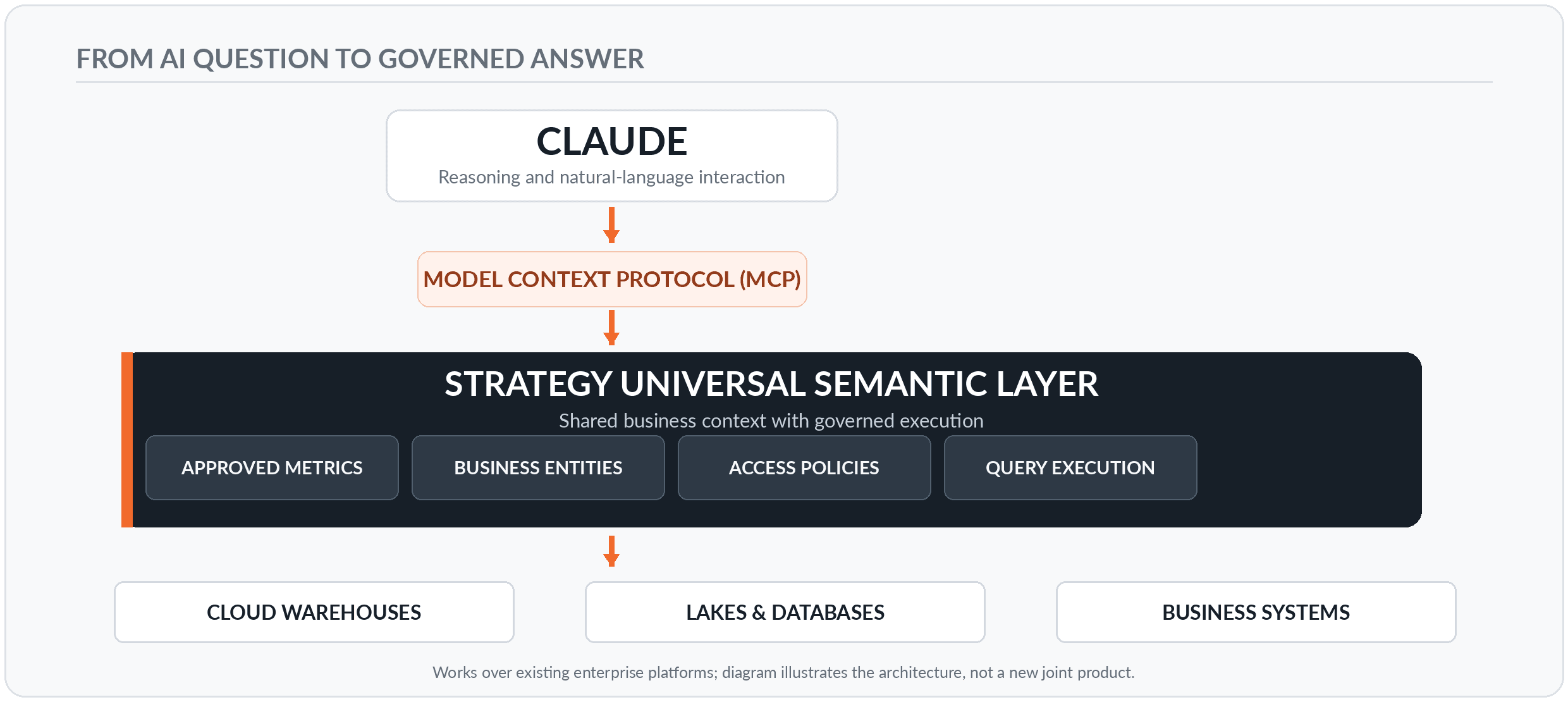
Figure 2. Claude can access governed business context through MCP and Strategy’s Universal Semantic Layer. Original conceptual illustration.
Ask Claude, “How did revenue and customer retention change across our regions last quarter?” Rather than requiring the model to infer every definition from physical tables, Strategy can expose validated measures and dimensions for the query. Claude is still responsible for interpreting the result, so human review remains important for consequential decisions.
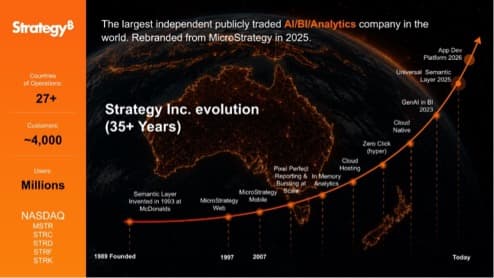
Strategy brings decades of enterprise analytics experience to this foundation. Its Universal Semantic Layer combines reusable business metrics, semantic models, governed access, and query execution across existing data platforms. Through MCP, Claude can use the same trusted definitions already established for enterprise analytics, without requiring organizations to rebuild business logic, security policies, or data integrations for another AI interface.
Governance should follow the query
A conversational interface should not become a separate route around enterprise security. Through Strategy’s MCP connection, authenticated users remain subject to model and data permissions. A regional manager and a company executive can use the same approved revenue metric while seeing different authorized slices of the business.
The current semantic-model MCP query interface is read-only, so this analytical access path cannot modify source records. That is a useful boundary, although it is not a complete governance framework for all agentic actions.
The data fabric still needs shared meaning
A data fabric connects and coordinates information across warehouses, lakehouses, databases, and applications. A universal semantic layer complements that infrastructure by making approved business meaning reusable across the connected estate.
This distinction becomes more valuable as enterprises mix AI models and modernize their data platforms. They should be able to adopt new tools without rebuilding every metric, hierarchy, and policy in a new place. Open interfaces such as MCP make governed context available to compatible AI clients while preserving flexibility in the underlying systems.
Models will change. Business meaning should endure.
A stronger foundation for trusted enterprise AI
A stronger foundation for trusted enterprise AI
Strategy’s Certified status reflects our growing Claude expertise, and our team is investing in customer delivery from here. The longer-term opportunity is architectural: connecting advanced AI reasoning to consistent, governed enterprise context without requiring each application to rebuild the metrics and policies the business already trusts. That gives AI, BI, and business applications a shared foundation for trusted analysis.
About the Claude Partner Network: The Claude Partner Network is how Anthropic works with the firms that put Claude into production for customers. The Services Track recognizes partners for building a certified delivery team, delivering Claude use cases for clients, and proving the work through public customer references. Partners advance through Certified, Select, Preferred, and Global Premier tiers
Watch the Claude integration demo; explore the Claude Partner Network and see how Strategy connects Claude to governed enterprise data through MCP.

Thomas Zockoll
Thomas Zockoll is part of Strategy's technical go-to-market team based in Dallas, Texas, helping enterprises connect AI to trusted, governed business data. He builds multi-agent systems with Claude and led Strategy's enrollment and certification in the Claude Partner Network.